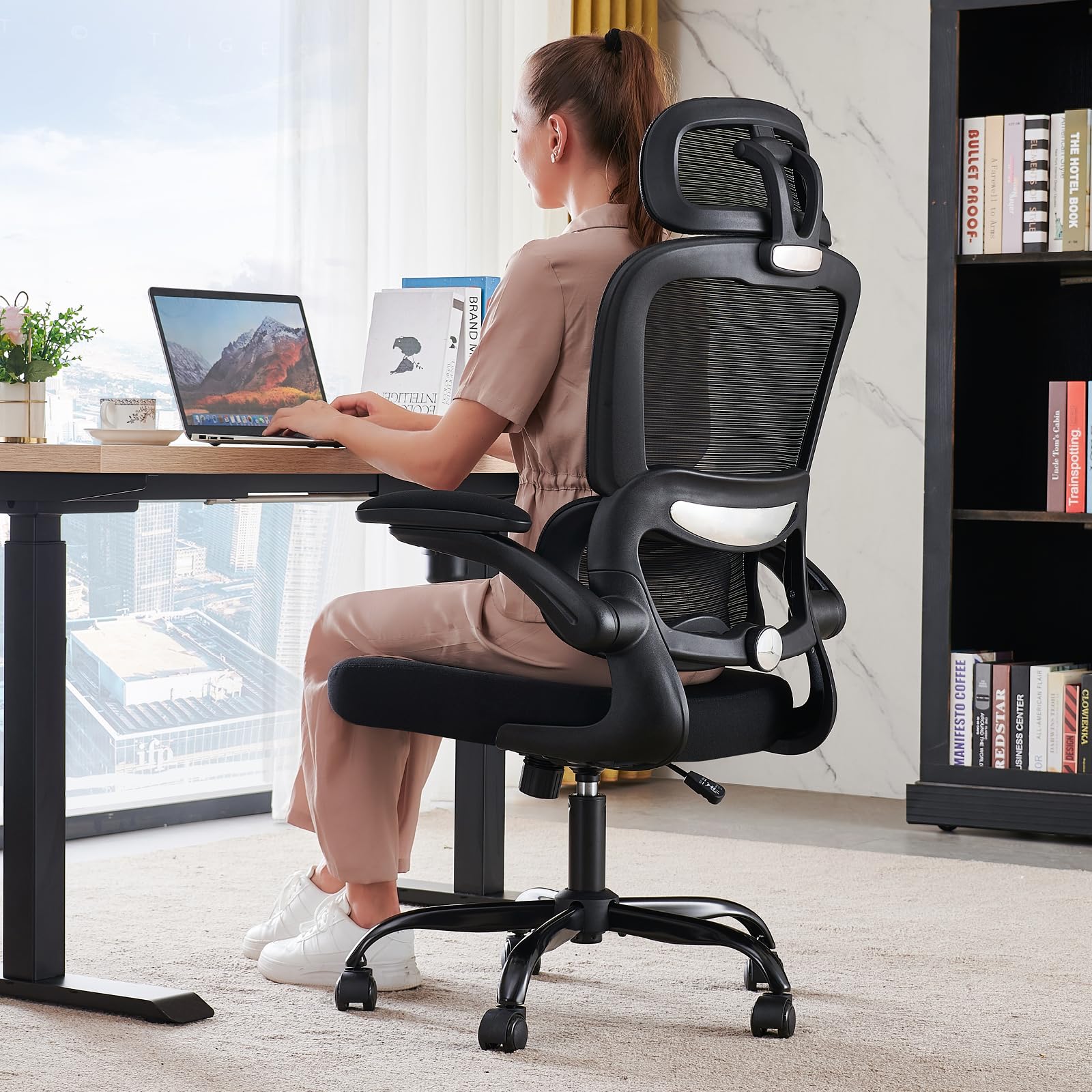
Most desk chairs under a certain price are the same chair in a different colour: a fixed plastic lump where the lumbar support should be, a foam pad that goes flat by the spring, and a back that turns into a radiator by mid-afternoon. This one is put together differently, and the differences are the kind you can measure. The lumbar support moves.
It is a mechanism with a dial, not a moulded bump, so you set its depth to the curve of your own back rather than sitting against the average of everyone else's. The backrest above it is high-tension mesh across a 20.1 inch frame, 27.5 inches tall, so air moves through the part of the chair your shirt is pressed against. The headrest at the top pivots, which matters on the two recline positions the back settles into when you push away from the desk to read something.
The seat is high-resilience moulded foam rather than budget foam, 19.7 inches across and 17.3 inches deep — deep enough to carry your thighs, short enough to leave a gap behind the knee. It rises and falls between 17.7 and 21.7 inches, which puts feet flat on the floor for most people between roughly 5 feet 4 and 6 feet 2. Underneath, the base is reinforced nylon with a metal core, rated to 330 pounds, on casters that glide rather than catch.
The armrests flip up through 90 degrees. That sounds like a small thing until you have a desk with a low lip, or a chair you would like to push all the way under it at the end of the day. The whole thing arrives flat and goes together in about 15 minutes with no extra tools, and it wipes clean with a damp cloth.